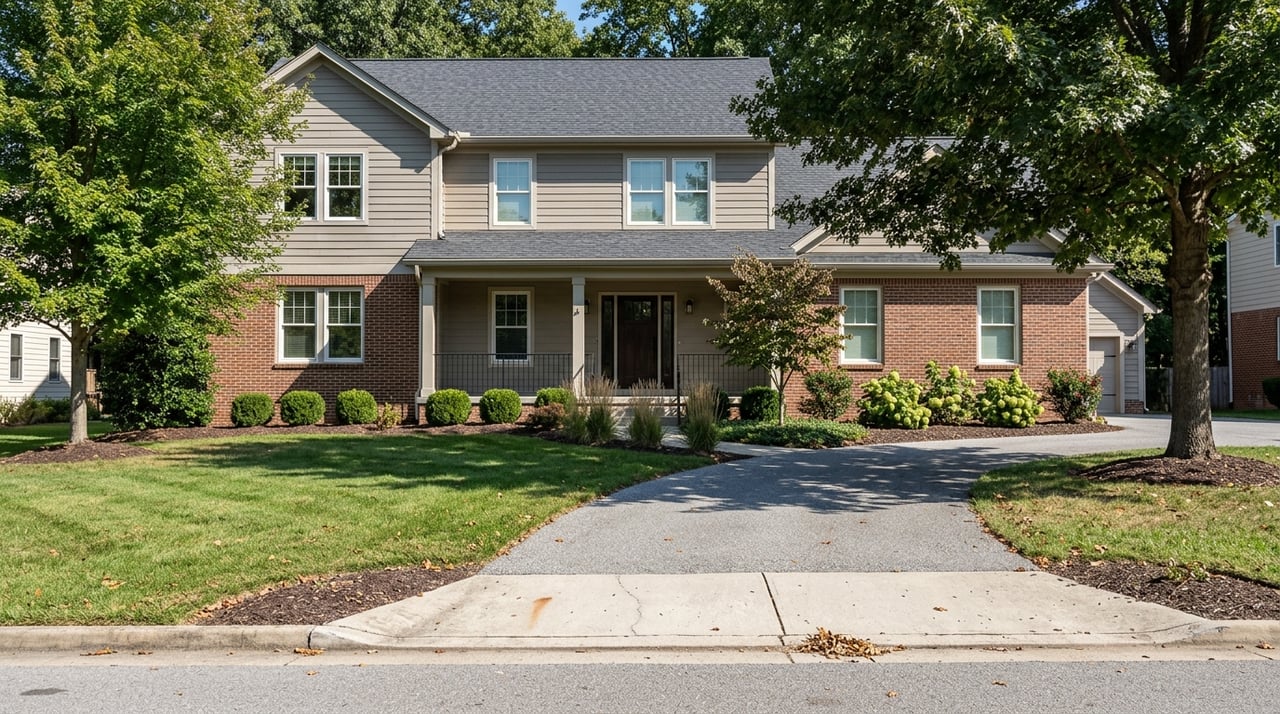
Trying to choose between Wildwood and Chesterfield? If you are looking in West County, this is one of the biggest lifestyle decisions you will make. Both cities offer strong housing values, outdoor access, and established neighborhoods, but they solve very different everyday needs. This guide will help you compare space, convenience, housing patterns, and daily rhythm so you can decide which fit makes the most sense for you. Let’s dive in.
Wildwood vs Chesterfield at a glance
The simplest way to compare these two areas is this: Wildwood gives you more space and a stronger nature-first setting, while Chesterfield gives you more convenience and a more retail-centered suburban layout.
According to the City of Wildwood demographics page, Wildwood spans 68 square miles and includes 11 square miles of publicly held open space. The city also describes itself as one of the more rural communities in the St. Louis metro area. By comparison, Chesterfield is much smaller at 31.88 square miles and is organized around suburban neighborhoods, parks, and major commercial corridors.
If your top priority is elbow room and a quieter edge-of-town feel, Wildwood stands out. If you want errands, dining, and shopping to feel more central to daily life, Chesterfield usually feels easier.
Wildwood lifestyle: space and open land
Wildwood is a strong match if you want a home that feels more connected to land and open space than to dense suburban development. Its planning framework supports that identity.
The city’s Master Plan keeps the Non-Urban Residence District as the major land-use category and states that new development generally should not exceed one unit per acre. It also notes a minimum lot size of three acres in the Non-Urban District. In practical terms, that points to lower density and larger lot expectations than many inner West County locations.
That does not mean every home in Wildwood sits on acreage. It does mean the city’s overall land-use pattern leans toward breathing room, preserved land, and a less compact feel.
What daily life can feel like in Wildwood
Wildwood tends to appeal to buyers who want a calmer pace and more separation between homes. The city notes that development is concentrated east of State Route 109 in large, traditional residential subdivisions, while the broader city footprint still carries a more rural identity.
You may also notice that local business activity feels more dispersed. Wildwood has more than 300 unique businesses, including restaurants, cafés, boutiques, wellness businesses, and pet care, but it reads more like a local small-business network than a single major shopping hub.
Chesterfield lifestyle: convenience and access
Chesterfield is often the better fit if you want a more classic suburban setup with neighborhoods, parks, shopping, and business districts closely tied together. It still offers outdoor amenities, but the overall experience is more convenience-driven.
The city’s planning and financial documents describe a strong retail base along Interstate 64/Highway 40, with Chesterfield Valley serving as a major business district and Chesterfield Commons identified as a very large retail center. Chesterfield’s Regional Commercial areas are also intended to serve retail, dining, entertainment, hotel, and leisure needs.
For many buyers, that translates to simpler everyday logistics. If you want shopping, dining, and services to feel closer and more centralized, Chesterfield has the clearer edge.
What daily life can feel like in Chesterfield
Chesterfield offers a more suburban-amenity mix. You still have parks and trails, but they sit within a framework that tends to prioritize accessibility and convenience.
That can matter if your schedule is full and you want your weekly routine to feel efficient. Running errands, heading out to dinner, or accessing major roadways may feel more straightforward in Chesterfield than in Wildwood.
Housing differences to know
If home style, lot size, and neighborhood pattern matter most to you, this is where the distinction gets sharper.
Wildwood’s official planning documents point to a lower-density housing pattern overall. Chesterfield, on the other hand, offers more variety.
According to Chesterfield planning materials, the city includes estate-style zoning with 1-acre minimum lots, but also more compact residential districts such as R5 with 6,000 square feet per dwelling unit. That suggests a broader range of lot configurations, from larger estate settings to more traditional suburban lots, based on the city’s zoning and planning framework.
Home age comparison
Housing stock also differs a bit by age. Current Point2Homes city profiles report a median construction year of 1992 in Wildwood and 1982 in Chesterfield.
That suggests Wildwood’s housing stock is somewhat newer overall, while Chesterfield’s is somewhat older citywide. For you, that may influence the style of homes you tour, the floor plans you encounter, and the updates you may want to budget for.
Parks and trails comparison
Both cities give you outdoor options, but they do it in different ways.
Wildwood is the more nature-heavy choice. The city says it has more than 35 miles of trails, not including many trails in Babler State Park, Rockwoods Reservation, and Greensfelder Park. Trails like the Al Foster Memorial Trail, Rock Hollow Trail, and Hamilton-Carr Greenway help reinforce that outdoor identity.
Chesterfield also has an impressive park system within a more suburban layout. The city’s parks and trails map includes Central Park, Eberwein Park, Logan Park, River’s Edge Park, Veterans Honor Park, the Chesterfield Amphitheater, and trail routes such as Monarch Levee Trail, Riparian Trail, and River’s Edge Park Trail. A city parks master-plan appendix says Chesterfield manages more than 540 acres of parkland and more than 16 miles of publicly accessible trails.
Which outdoor setting fits better?
Choose Wildwood if you want the outdoors to feel like a central part of your lifestyle. Choose Chesterfield if you want parks and trails nearby, but within a more developed suburban environment.
Neither approach is better across the board. It depends on whether you want recreation to feel immersive or conveniently integrated into a busier suburban routine.
Commute and convenience tradeoffs
This is one of the most practical differences between the two cities.
Census QuickFacts shows a mean travel time to work of 27.3 minutes in Wildwood and 21.6 minutes in Chesterfield. That is a noticeable gap if your schedule depends on frequent commuting.
The same census data shows owner-occupied housing unit rates of 91.8% in Wildwood and 77.6% in Chesterfield. Wildwood’s higher owner-occupancy rate may suggest a more owner-dominant, lower-turnover environment.
Home value snapshot
Both cities sit at relatively high price points for owner-occupied homes. Census QuickFacts reports median owner-occupied home values of $495,800 in Wildwood and $472,500 in Chesterfield.
That means your decision may come down less to broad price separation and more to what you want your money to buy. In Wildwood, that often means more land and a quieter setting. In Chesterfield, it often means easier access to amenities and a more connected suburban experience.
How to choose the right fit
If you are still deciding, ask yourself what you want your average Tuesday to look like. That question often reveals more than comparing square footage alone.
Choose Wildwood if you want:
- Larger lots and lower-density surroundings
- More preserved open space
- A trail-heavy, outdoor-oriented setting
- A quieter, more rural-feeling West County environment
Choose Chesterfield if you want:
- Shorter average commute times
- Easier access to shopping and dining
- A more centralized suburban layout
- Parks and trails within a convenience-focused setting
The bottom line on Wildwood vs Chesterfield
Wildwood and Chesterfield are both strong West County options, but they serve different goals. Wildwood tends to maximize space, land, and nature, while Chesterfield tends to maximize convenience, amenities, and accessibility.
If you want help narrowing down where your budget, lifestyle, and home preferences align best, working with a local expert can save you time and help you compare options more strategically. When you are ready to talk through the right West County fit, connect with Adam Briggs.
FAQs
Is Wildwood or Chesterfield better for larger lots?
- Wildwood is generally the stronger fit for larger lots and lower-density development, based on the city’s Master Plan and land-use framework.
Is Chesterfield or Wildwood better for shopping and dining convenience?
- Chesterfield is the more retail-concentrated option, with major commercial areas like Chesterfield Valley and Chesterfield Commons supporting easier day-to-day convenience.
Does Wildwood have more trails than Chesterfield?
- Yes. Wildwood reports more than 35 miles of trails, while Chesterfield reports more than 16 miles of publicly accessible trails.
Is Chesterfield easier for commuting than Wildwood?
- Based on Census QuickFacts, Chesterfield has a shorter mean travel time to work at 21.6 minutes compared with 27.3 minutes in Wildwood.
Are home values similar in Wildwood and Chesterfield?
- Yes. Census QuickFacts shows median owner-occupied home values of $495,800 in Wildwood and $472,500 in Chesterfield, so both are relatively high-value West County markets.